
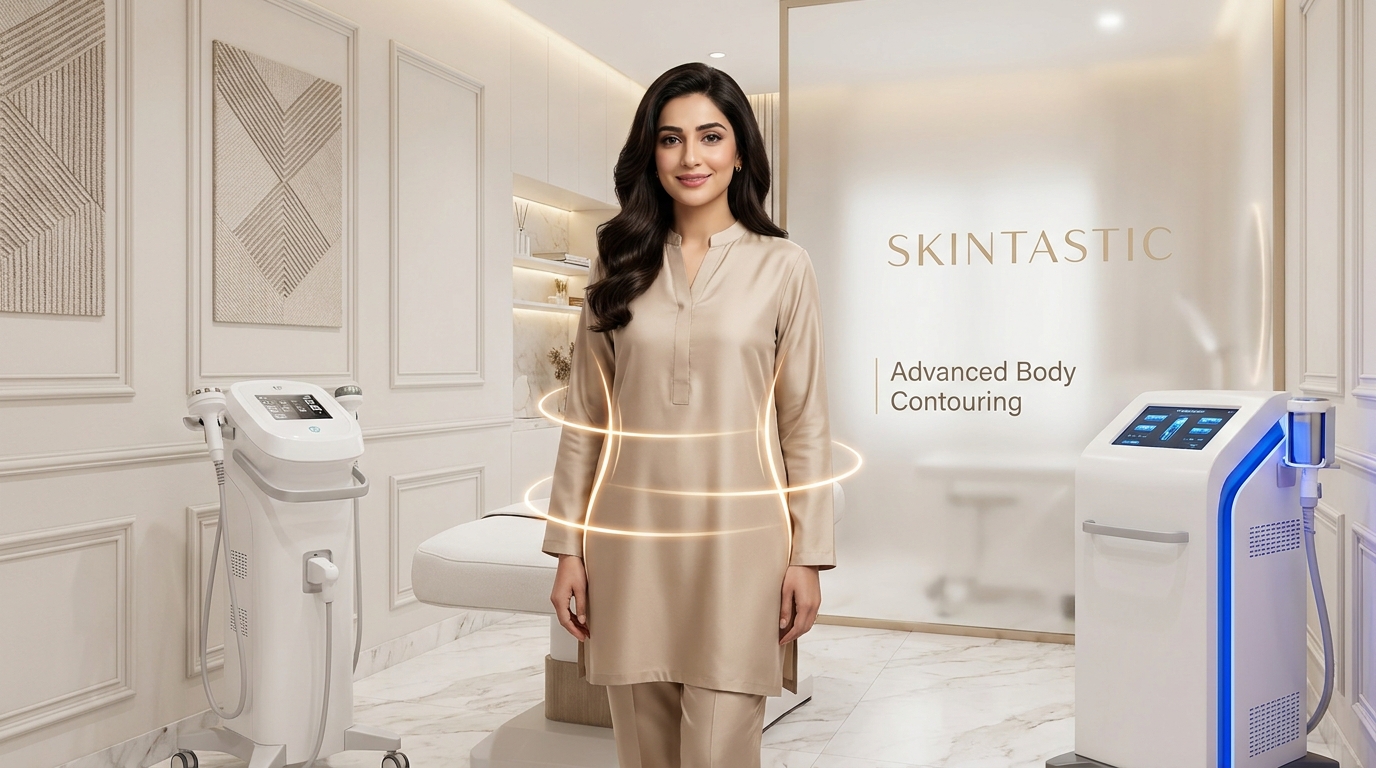
A 360 body transformation using non-surgical fat reduction treatments is a comprehensive contouring approach that targets stubborn localized fat pockets across the abdomen, flanks, and back simultaneously. This systematic process utilizes advanced aesthetic technologies—such as radiofrequency heating, intense cooling, or electromagnetic stimulation—to induce cellular death in subcutaneous fat layers without disrupting the surrounding skin. Patients bypass surgical risks and extensive recovery periods, instead experiencing gradual circumference reduction and improved body definition over a period of 2 to 3 months. In aesthetic medicine, combining treatments to address the entire midsection circumference is a standard protocol for achieving harmonious, proportional body contouring results for clinic visitors in Pakistan.
360 Body Transformation: What to Expect Non-Surgical Fat Reduction Treatments Explained
Key Takeaways:
- Non-surgical 360 body transformations target multiple areas simultaneously to reduce localized fat and contour the physique without incisions.
- Treatments utilize thermal energy, cold temperatures, or electromagnetic fields to permanently destroy targeted fat cells.
- Visible results typically appear between 8 to 12 weeks as the lymphatic system processes and eliminates the disrupted adipocytes.
1. What Constitutes a 360 Body Transformation?
A full 360 body transformation addresses the entire circumference of the torso, including the upper abdomen, lower abdomen, left flank, right flank, and mid-back areas. Practitioners map the body systematically to ensure uniform fat reduction and prevent uneven contours. The goal is to reduce the volume of subcutaneous adipose tissue by 20 to 30 percent in the treated zones. The body naturally processes the destroyed fat cells through the lymphatic system, metabolizing them via the liver and excreting them as waste. This non-invasive methodology focuses entirely on body sculpting rather than overall weight loss, making it suitable for individuals near their target body mass index who struggle with diet-resistant fat deposits.
The protocols for a 360 transformation often combine different modalities to address both fat volume and skin laxity. A single technology may reduce fat, but concurrent skin tightening is necessary to ensure the skin retracts smoothly over the newly contoured areas. Aesthetic specialists design customized plans detailing the exact number of sessions, the specific technologies applied to each anatomical zone, and the specific time intervals required between clinic visits.
2. Core Modalities in Non-Surgical Fat Reduction
Non-surgical fat reduction relies on specific physical mechanisms—temperature manipulation, chemical breakdown, or electromagnetic muscle stimulation—to disrupt adipocyte integrity. Understanding the available technologies helps patients set accurate expectations for their body transformation journey.
Radiofrequency (RF) Energy Treatments
Radiofrequency devices deliver controlled thermal energy deep into the dermal and subcutaneous layers. The technology heats the targeted fat cells to temperatures between 42°C and 45°C. Sustained exposure to this specific heat range triggers apoptosis, a form of controlled cellular death. Over the subsequent weeks, macrophages consume the damaged cells. A primary advantage of RF technology is the simultaneous stimulation of fibroblasts, which produce new collagen and elastin fibers, leading to mild to moderate skin tightening. For individuals seeking these benefits locally, RF sculpting in Sargodha offers a standardized approach to thermal fat reduction and tissue firming.
Cryolipolysis (Fat Freezing)
Cryolipolysis operates on the scientific principle that fat cells are highly vulnerable to cold temperatures compared to skin and muscle tissue. The device utilizes precise applicators to suction the targeted tissue and lower the temperature to approximately -11°C. This targeted cooling crystallizes the lipids inside the fat cells, causing structural damage that leads to apoptosis. The surrounding epidermis, dermis, and underlying muscle structures remain unharmed due to their higher resistance to cold temperatures. The American Society of Plastic Surgeons outlines that non-surgical fat reduction using cryolipolysis typically yields a 20 to 25 percent reduction of fat in the treated area per session.
High-Intensity Focused Electromagnetic (HIFEM) Technology
HIFEM technology induces supramaximal muscle contractions that cannot be achieved through voluntary exercise. A single 30-minute session produces approximately 20,000 deep muscle contractions. This extreme physical stress forces the muscle tissue to adapt, resulting in myofibrillar hypertrophy (muscle growth). Concurrently, the intense energy demand triggers a localized catabolic reaction, breaking down nearby fat cells to supply free fatty acids as fuel for the contracting muscles. Treatments like Emsculpt are commonly used to build core strength while simultaneously reducing overlying abdominal fat.
Injection Lipolysis
Injection lipolysis involves administering chemical compounds directly into the subcutaneous fat layer. The most common active ingredient is deoxycholic acid, a synthetic version of a naturally occurring bile acid that the body uses to break down dietary fat. When injected, the acid disrupts the adipocyte cell membrane, causing the cell to burst. The body then clears the cellular debris. Fat dissolving injections are particularly effective for smaller, highly localized pockets of fat, such as the submental area (double chin) or small bra bulges, rather than large-volume reduction across the entire abdomen.
3. The 360 Transformation Timeline: Step-by-Step
The process of a non-surgical 360 body transformation spans several months, beginning with clinical assessment and concluding with final visible results after 12 weeks. Adhering to the specific timeline ensures the lymphatic system can effectively process the cellular waste without becoming overloaded.
Step 1: Clinical Consultation and Assessment
The practitioner conducts a physical examination to measure subcutaneous fat thickness, evaluate skin elasticity, and review medical history. The specialist records baseline measurements and captures standardized photographs from multiple angles. The treatment plan specifies the chosen technologies, the exact target zones, and the financial investment required.
Step 2: The Procedure Sessions
On the treatment day, the patient lies in a clinical setting while the practitioner applies the selected devices. A single session targeting the full 360 circumference (front, sides, and back) typically requires 60 to 120 minutes, depending on the specific technology used. Patients experience sensations ranging from intense cold and vacuum pressure to deep warmth or involuntary muscle contractions. No general anesthesia or localized numbing injections are necessary.
Step 3: Immediate Post-Treatment Phase
Immediately following the procedure, the treated areas exhibit temporary erythema (redness), mild edema (swelling), and possible tissue tenderness. These acute responses resolve within 24 to 72 hours. Patients resume all normal daily activities, including physical exercise and professional duties, immediately upon leaving the clinic.
Step 4: The Elimination and Results Phase
The biological clearance of fat cells occurs gradually. Patients typically notice preliminary changes in contour and clothing fit around week 4. The most significant visual improvements manifest between week 8 and week 12. During this period, maintaining adequate hydration (minimum 2.5 liters of water daily) is essential to support lymphatic drainage and optimize the final outcome.
4. Managing Expectations for Fat Reduction
Non-surgical body contouring results are highly effective for circumference reduction but require realistic expectations regarding the volume of fat removed. These procedures are categorized as cosmetic sculpting treatments, not bariatric weight-loss solutions.
A single 360 treatment protocol generally yields a 1 to 3-inch reduction in total waist circumference. The fat cells destroyed during the procedure are permanently eliminated from the body and cannot regenerate. However, the remaining fat cells in the treated and untreated areas possess the capacity to expand if the patient consumes a hypercaloric diet. Therefore, long-term maintenance of the results depends entirely on stable body weight and consistent nutritional habits. Practitioners advise patients to integrate regular cardiovascular activity and strength training into their routines to preserve the muscular definition and reduced fat volume achieved during the clinical sessions.
5. Evaluating Ideal Candidates
The ideal candidate for a non-surgical 360 body transformation is a healthy adult within 15 to 20 pounds of their ideal body weight, possessing isolated pockets of subcutaneous fat. Clinical selection criteria prioritize tissue composition and overall health status.
Candidates must present with “pinchable” subcutaneous fat rather than visceral fat. Visceral fat, which resides deep within the abdominal cavity beneath the muscle wall and surrounds the internal organs, does not respond to non-surgical aesthetic modalities; it only decreases through caloric deficit and systemic weight loss. Additionally, patients should exhibit good to excellent skin elasticity. Severe skin laxity or significant abdominal muscle separation (diastasis recti) following multiple pregnancies may require surgical intervention, such as an abdominoplasty, rather than non-invasive treatments.
6. Comparing Surgical versus Non-Surgical Approaches
Comparing liposuction to non-surgical modalities highlights distinct differences in procedural invasiveness, recovery timelines, and total fat volume reduction capabilities. Patients must weigh these factors alongside clinical recommendations.
| Feature | Non-Surgical 360 Transformation | Traditional Liposuction |
|---|---|---|
| Anesthesia Requirement | None required | Local or General anesthesia |
| Clinical Downtime | Zero hours; immediate return to routine | 1 to 3 weeks of restricted activity |
| Fat Reduction Volume | 20% to 30% reduction per treated area | Up to 70% reduction in a single procedure |
| Incision Type | Non-invasive (No incisions) | Surgical incisions requiring sutures |
| Results Timeline | Gradual onset over 8 to 12 weeks | Immediate reduction, final contour at 6 months |
7. Clinical Safety and Potential Side Effects
Non-surgical fat reduction technologies possess robust clinical safety profiles when operated by certified aesthetic practitioners, with adverse events remaining predominantly localized and transient. The American Board of Cosmetic Surgery notes that non-surgical fat reduction is generally safe and presents fewer risks than surgical alternatives.
Common, expected side effects directly following a session include localized erythema, mild ecchymosis (bruising), temporary paresthesia (numbness or tingling), and tissue induration (firmness) in the treated zones. These physiological responses indicate active tissue disruption and typically self-resolve within 14 days. Rare complications vary by technology. Cryolipolysis carries a statistical risk (less than 1%) of Paradoxical Adipose Hyperplasia (PAH), wherein the treated fat tissue visibly enlarges rather than shrinks. Radiofrequency treatments carry a risk of superficial thermal burns if the continuous motion of the applicator is disrupted. Thorough pre-treatment screening ensures patients with contraindications—such as cold agglutinin disease, implanted electrical devices (pacemakers), or active hernias in the treatment area—are excluded from specific protocols to maintain high medical safety standards.
Conclusion
A non-surgical 360 body transformation provides a targeted, structured method for individuals seeking focused circumference reduction and contouring without the requisite downtime of surgical intervention. By combining technologies that address both localized adiposity and overlying skin laxity, patients achieve comprehensive midsection sculpting. While the results develop progressively through the body’s natural metabolic pathways, the permanent destruction of targeted fat cells offers lasting structural improvements. Strict adherence to proper candidate selection, customized multi-modality treatment planning, and sustained lifestyle maintenance ensures optimal, proportionate contouring outcomes.
Frequently Asked Questions
Q: Does a 360 body transformation help you lose weight?
A: No, non-surgical fat reduction is not a weight loss method but rather a body contouring procedure. The treatments selectively destroy localized fat deposits to alter physical proportions, but the total mass of the destroyed fat is generally insufficient to register as significant weight loss on a scale.
Q: Are the results from non-surgical fat reduction permanent?
A: Yes, the specific fat cells destroyed during the treatment are permanently eliminated from the body. However, the remaining fat cells can still expand if calorie intake exceeds daily energy expenditure, meaning weight maintenance is necessary to preserve the final contoured appearance.
Q: Is non-surgical body contouring painful?
A: No, most patients report minimal discomfort during non-invasive fat reduction treatments. Depending on the modality used, patients may experience intense cooling, deep warmth, or strong muscle contractions, but these sensations are generally well-tolerated without the need for topical anesthetics or pain medication.
Q: Can these treatments tighten loose skin?
A: Yes, specific modalities utilizing radiofrequency or ultrasound energy can stimulate the production of new collagen and elastin in the dermis. This biological response commonly leads to mild or moderate skin tightening alongside the fat reduction, preventing tissue laxity after the underlying fat volume decreases.
Q: Do I need multiple sessions for a complete 360 body transformation?
A: Yes, most treatment plans require 3 to 6 sessions spaced 1 to 2 weeks apart to achieve comprehensive clinical results. The exact number of sessions depends entirely on the initial fat volume, the patient’s aesthetic goals, and the specific technology utilized in the clinic.