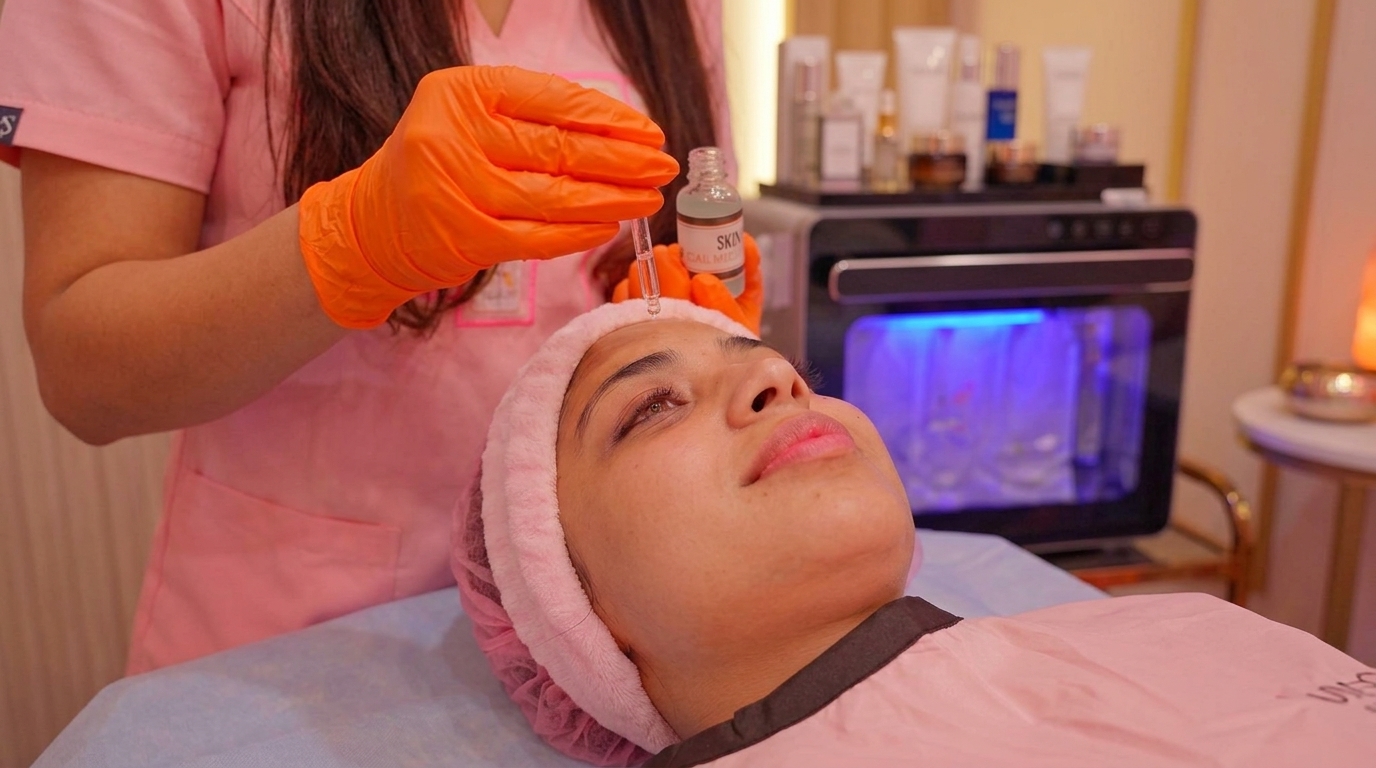
Your skincare routine isn’t working because over-the-counter products cannot penetrate the protective stratum corneum deeply enough to reverse structural damage without the aid of professional clinical treatments. Many individuals invest heavily in luxury creams and multi-step home regimens, only to experience stagnant results after a few months. The human epidermis functions primarily as a highly effective defense mechanism, designed specifically to keep external substances out of the body. While daily cleansing, moisturizing, and sun protection are mandatory for surface maintenance, they lack the biochemical delivery systems required to correct severe hyperpigmentation, atrophic scarring, or advanced laxity. To achieve visible physiological changes, dermatological protocols require mechanical, chemical, or light-based interventions that bypass the surface barrier. By combining a targeted home routine with aesthetic procedures in Sargodha, patients can establish a comprehensive cellular regeneration plan that addresses both superficial hydration and deep tissue repair.
Key Takeaways:
- The skin’s natural barrier prevents 90% of over-the-counter topical ingredients from reaching the deeper dermis.
- Clinical modalities utilize controlled physical and thermal mechanisms to stimulate structural collagen remodeling.
- Professional exfoliation methods remove cellular buildup instantly, allowing daily topical serums to absorb up to 50% more effectively.
Why Your Skincare Isn’t Working Without Professional Treatments
1. The Stratum Corneum Barrier Prevents Product Penetration
The outermost layer of the skin, the stratum corneum, acts as a waterproof lipid shield that blocks large-molecule active ingredients from reaching the living dermis. This barrier consists of 15 to 20 layers of dead, flattened skin cells called corneocytes, suspended in a matrix of ceramides, cholesterol, and fatty acids. When you apply standard lotions or serums, the vast majority of the formulation simply coats this dead cellular layer. Ingredients like standard hyaluronic acid or unmodified collagen proteins possess molecular weights that are significantly too large to pass through the lipid matrix.
The Limitation of Topical Delivery Systems
Even highly formulated over-the-counter serums face biological limitations. While some specialized lipids can carry small active molecules slightly deeper into the epidermis, they rarely reach the basal layer or the underlying dermis where actual skin regeneration occurs. The dermis houses the fibroblasts—the cells responsible for producing collagen, elastin, and natural hyaluronic acid. Because topical products sit above the dermis, they can temporarily plump the skin by trapping water on the surface, but they cannot instruct the fibroblasts to synthesize new structural proteins. According to the American Academy of Dermatology, maximizing skincare absorption often requires complementary exfoliation or clinical preparation to thin the barrier temporarily and safely.
2. Over-the-Counter Strengths vs. Clinical Formulations
Over-the-counter cosmetics are legally restricted to lower concentrations of active ingredients, meaning they can primarily maintain surface hydration rather than correct deep cellular dysfunction. Regulatory agencies limit the percentage of potent acids and retinoids available directly to consumers to prevent chemical burns and severe irritation in unsupervised settings. Consequently, the retinol or glycolic acid purchased at a pharmacy is a fraction of the strength utilized in a medical clinic.
Chemical Peels and Dermal Remodeling
Professional treatments utilize specific pH levels and high concentrations to achieve controlled tissue ablation. For example, an advanced chemical peel administered by a practitioner can penetrate through the epidermis to induce desquamation (peeling) over 3 to 7 days. This process forcibly sheds photo-damaged cells and lifts trapped melanin deposits that cause stubborn melasma and sunspots. An over-the-counter 2% salicylic acid cleanser simply cannot replicate the structural cellular turnover initiated by a clinical 20% TCA (Trichloroacetic Acid) or phenol blend. Clinical peels can support a more uniform skin tone and smoother texture precisely because they operate beyond the superficial limitations of retail skincare.
3. How Professional Exfoliation Accelerates Cellular Turnover
Clinical exfoliation methods remove compacted dead skin cells instantly, allowing your daily medical-grade products to penetrate the epidermis far more efficiently. In young, healthy skin, the natural cellular turnover cycle takes approximately 28 days. As the body ages, or when subjected to environmental stressors such as the dry climate and pollution in Sargodha, this cycle slows down to 40 or even 50 days. The result is a thick layer of retained dead cells that causes a dull complexion, clogs pores, and entirely blocks the absorption of expensive homecare serums.
Mechanical and Suction-Based Exfoliation
Treatments like microdermabrasion or hydro-dermabrasion physically dismantle this barrier. By using diamond-tipped wands or vacuum-assisted fluid extraction, clinical devices clear away the hardened stratum corneum in a single 45-minute session. Once this debris is removed, the fresh, porous skin underneath is temporarily highly receptive to active ingredients. Applying a targeted Vitamin C serum or a peptide complex immediately following a professional exfoliation procedure ensures the active molecules enter the living tissue rather than resting uselessly on dead cells. Patients who undergo regular clinical exfoliation report that their home skincare routines yield significantly better hydration and brightening results.
4. The Role of Controlled Micro-Injuries in Collagen Production
Clinical devices create controlled micro-injuries within the skin tissue to naturally trigger the body’s wound-healing response, resulting in new collagen and elastin formation. Over-the-counter firming creams often claim to tighten the skin, but topical application cannot physically reorganize damaged collagen fibers. To treat deep wrinkles, acne craters, and overall laxity, the dermal tissue requires a physical or thermal stimulus that commands the immune system to rebuild the area.
Microneedling and Energy-Based Devices
Medical microneedling (collagen induction therapy) uses sterile, motorized needles to puncture the dermis at precise depths ranging from 0.5mm to 2.5mm. This action breaks down old, tethered scar tissue and signals the body to send blood, growth factors, and fibroblasts to the treatment site. Studies documented by the National Institutes of Health (NIH) confirm that microneedling significantly upregulates Type I and Type III collagen production. Similarly, laser resurfacing and radiofrequency devices utilize concentrated thermal energy to heat the dermal layers to 40-42 degrees Celsius. This specific temperature causes immediate collagen contraction and stimulates long-term neocollagenesis. These structural transformations are entirely impossible to achieve with topical creams alone.
5. Integrating Clinic Procedures with Daily Home Regimens
A balanced dermatological plan requires integrating advanced clinical therapies every 4 to 6 weeks with a customized daily home regimen to maintain and protect the results. Professional treatments and at-home skincare are not mutually exclusive; rather, they form a symbiotic relationship. The clinical procedure performs the heavy lifting by restructuring the skin, clearing deep congestion, and stimulating new cell growth. The home routine acts as the daily nourishment and protection mechanism that sustains those clinical gains.
Building a Comprehensive Protocol
A standard evidence-based approach involves scheduling a clinical treatment suited to the specific skin concern—such as a deep hydration facial for dry skin or fractional lasers for scarring—once a month. Between these appointments, the patient must apply a gentle cleanser, a clinically validated antioxidant serum, a barrier-repair moisturizer, and a broad-spectrum SPF 50 sunscreen daily. The sunscreen is particularly vital, as professional treatments often leave the skin temporarily more photosensitive. Without strict daily UV protection, the new, healthy cells generated by the clinic procedure will rapidly sustain photo-damage, negating the investment in the treatment.
Conclusion
Relying solely on over-the-counter creams severely limits the potential of your skin’s health and appearance. Because the human skin barrier is highly resistant to topical penetration, daily products primarily manage surface hydration and minor protection. To achieve transformative results regarding acne scarring, deep hyperpigmentation, and structural aging, professional treatments are necessary to bypass the epidermis and stimulate cellular repair at the dermal level. By combining high-impact clinical therapies with a rigorous daily regimen, patients can ensure active ingredients penetrate deeply and fibroblasts consistently produce vital collagen. Consulting with a certified aesthetic provider is the first step in diagnosing specific barrier issues and designing a comprehensive treatment protocol.
Frequently Asked Questions
Does my daily skincare routine still matter if I get professional treatments?
Yes, your daily skincare routine remains essential to protect the skin barrier, provide daily UV defense, and prolong the results achieved during professional treatments.
Are clinical facial treatments safe for sensitive skin types?
Yes, clinical facial treatments are generally safe for sensitive skin when a certified practitioner customizes the protocol and uses appropriate chemical strengths to avoid excessive irritation.
Will an advanced chemical peel thin my skin over time?
No, an advanced chemical peel actually thickens the deeper layers of the dermis over time by forcing the body to stimulate new, healthy collagen production.
Do over-the-counter creams build collagen effectively?
No, over-the-counter creams cannot penetrate deeply enough to significantly build structural collagen compared to physical microneedling or energy-based clinic devices.
Is microneedling better than topical serums for acne scars?
Yes, microneedling physically breaks down tethered scar tissue and builds structural volume from the inside out, which topical serums alone cannot achieve.