
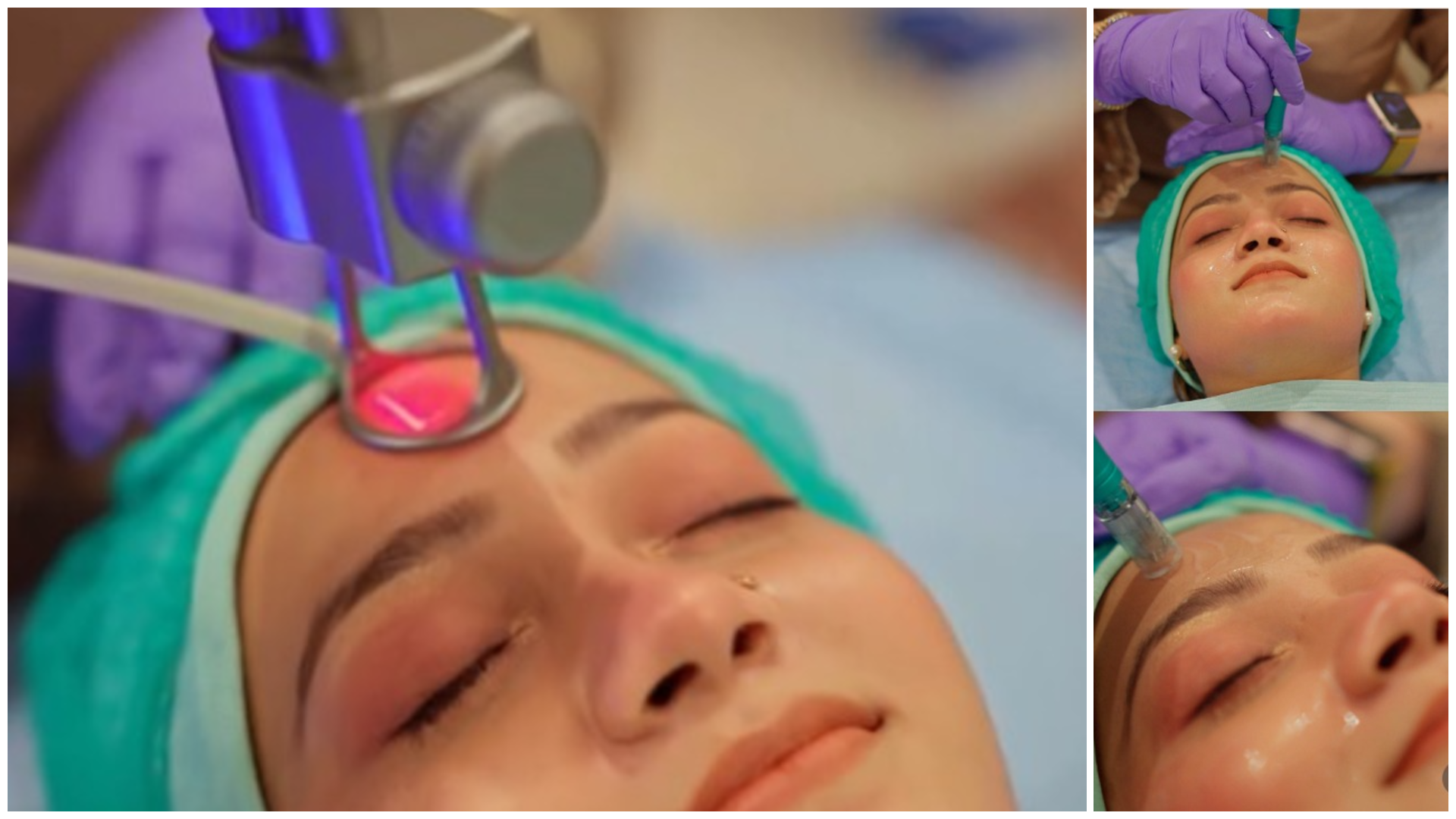
The Co2 laser and microneedling duo transforms your skin by creating controlled micro-injuries through both thermal energy and physical puncture, which forces the body to produce new collagen and elastin fibers. This combined clinical approach is commonly used to accelerate tissue repair, smooth uneven textures, and improve overall skin firmness. By addressing different layers of the dermis simultaneously, these modalities provide a more comprehensive structural remodeling than either treatment performed in isolation.
Key Takeaways:
- Combining these two treatments addresses both surface irregularities and deep structural skin concerns.
- The dual approach triggers a dual healing response, stimulating collagen types I and III simultaneously.
- Patients typically observe a 30 to 50 percent improvement in scar depth after a series of combined sessions.
- Strict sun protection and proper aftercare are mandatory, especially for skin types common in Pakistan.
How Does Co2 Laser and Microneedling Duo Transform Your Skin?
1. Understanding the Core Mechanics of Both Treatments
The combined therapy works by merging the thermal tissue ablation of the laser with the physical collagen induction of the needles to maximize the wound-healing cascade. The human skin responds to controlled trauma by initiating an inflammatory phase, a proliferative phase, and finally a remodeling phase. When both thermal and physical stimuli are applied during the same treatment protocol, the resulting cellular activity is significantly amplified.
To understand the synergy, we must evaluate the individual mechanisms of action. The CO2 fractional laser emits beams of light at a wavelength of 10,600 nanometers. This light is absorbed by the water in the skin tissue, causing instantaneous vaporization of targeted micro-columns of skin. This process leaves surrounding healthy tissue intact to aid in rapid healing. Conversely, microneedling, also known as collagen induction therapy, utilizes sterile, surgical-grade needles ranging from 0.5 millimeters to 2.5 millimeters in depth to physically puncture the stratum corneum and reach the dermis. This mechanical action releases platelet-derived growth factors without applying heat.
When administered together, the non-thermal micro-channels created by the needles allow for deeper penetration of topical serums, while the thermal zones created by the laser contract the tissue, resulting in immediate skin tightening. This precise combination of physical and thermal injury is why medical professionals often recommend this duo for severe textural issues.
2. The Biological Impact of Fractional Thermal Energy
Fractional thermal energy transforms the skin by ablating tiny columns of tissue to trigger immediate contraction and long-term neocollagenesis. Unlike traditional fully ablative lasers that remove the entire top layer of the skin, the fractional method targets only 15 to 30 percent of the skin surface per session. This selective targeting is crucial for maintaining a manageable safety profile and minimizing downtime.
The Role of Microscopic Treatment Zones
The laser creates specific areas known as Microscopic Treatment Zones (MTZs). Within each MTZ, the tissue is subjected to controlled thermal necrosis. The surrounding healthy skin acts as a reservoir of viable cells that rapidly migrate into the damaged zones to begin the repair process. This thermal interaction stimulates fibroblasts, the primary cells responsible for synthesizing extracellular matrix components.
Over a period of 3 to 6 months following the procedure, the body continuously deposits new collagen along these thermal pathways. Studies published by the American Academy of Dermatology note that fractional laser treatments can support structural skin changes that remain visible for several years. For patients seeking measurable improvements in deep wrinkles or severe acne scarring, this thermal contraction is an essential component of the treatment plan.
3. The Science Behind Physical Microneedling
Physical microneedling improves the skin by physically breaking down old, tethered scar tissue and forcing the localized release of healing growth factors. While the laser provides heat, microneedling provides a cold, mechanical disruption that is highly effective for breaking up fibrous bands beneath the surface of the skin.
Stimulating Natural Repair Mechanisms
When the fine needles penetrate the epidermal and dermal layers, they cause tiny micro-hemorrhages. This localized, controlled bleeding triggers the release of transforming growth factor-beta (TGF-beta), platelet-derived growth factor (PDGF), and fibroblast growth factor (FGF). These specific proteins are mandatory for the creation of healthy, new blood vessels (angiogenesis) and the formation of a robust collagen matrix.
The physical breakdown of old collagen bundles is particularly beneficial for acne scar removal. Atrophic scars, such as boxcar and rolling scars, are often held down by rigid, fibrous strands. The mechanical penetration of the needles severs these strands, allowing the depressed skin to rise and level out with the surrounding tissue. Furthermore, the absence of heat during this specific part of the dual treatment ensures that melanocytes (pigment-producing cells) are not overstimulated, which is vital for patients with darker skin types (Fitzpatrick types III to V) common in Pakistan.
4. Why Combine These Two Specific Modalities?
Combining the laser and microneedling modalities yields superior results because it addresses the skin through two completely distinct biological pathways simultaneously. Treating severe dermatological conditions often requires a multi-layered approach. While one device focuses on superficial resurfacing and tightening, the other focuses on deep structural remodeling and the breakdown of fibrous tissue.
According to research highlighted by the National Center for Biotechnology Information, combination therapies often yield higher patient satisfaction rates than monotherapies. The table below outlines the distinct contributions of each treatment when used in a combined protocol.
| Treatment Feature | Co2 Fractional Laser | Microneedling |
|---|---|---|
| Primary Action | Thermal ablation and tissue coagulation | Mechanical puncture and physical trauma |
| Target Skin Depth | Superficial to mid-dermis (adjustable) | Mid to deep dermis (0.5mm – 2.5mm) |
| Main Benefit | Skin tightening and surface smoothing | Breaking up tethered scars and deep collagen induction |
| Melanin Stimulation | Moderate to High (requires careful parameters) | Very Low (safe for all skin types) |
By layering these treatments, clinicians in locations like Sargodha can tailor the intensity of each modality. For example, a practitioner may use aggressive microneedling depths to target deep rolling scars, while using a lighter setting on the laser to gently polish the epidermis and improve overall skin tone without causing excessive post-inflammatory hyperpigmentation.
5. Conditions Treated by the Duo Approach
The duo approach effectively treats atrophic acne scarring, significant sun damage, chronic textural irregularities, and age-related skin laxity. Because the treatment involves complete structural remodeling, it is not typically used for active inflammatory acne, but rather for the permanent damage left behind once acne has resolved.
Addressing Textural Irregularities and Laxity
Patients with severe textural issues, such as enlarged pores or rough patches caused by chronic sun exposure, often see significant changes. The laser vaporizes the damaged superficial cells, while the microneedling thickens the dermis underneath, causing pores to appear smaller and the skin surface to feel smoother. For skin laxity, the immediate thermal contraction provided by the CO2 wavelength tightens loose collagen fibers, while the subsequent 90-day neocollagenesis triggered by both treatments provides long-term firming.
Clinical observations suggest that treating deep atrophic scars may require 3 to 5 combined sessions, spaced 4 to 6 weeks apart, to achieve optimal tissue elevation. It is important to maintain realistic expectations, as aesthetic procedures aim for improvement rather than total eradication of skin flaws.
6. The Clinical Procedure and Protocol in Sargodha
The clinical protocol involves thorough pre-treatment preparation, the application of high-strength topical anesthetics, the precise execution of both devices, and strict post-treatment care. Safety and precision are the primary concerns during this intensive procedure. The entire appointment generally takes 90 to 120 minutes, depending on the surface area being treated.
Pre-Treatment Preparation
Preparation begins 2 to 4 weeks before the actual procedure. Patients are strictly advised to avoid direct ultraviolet (UV) exposure. In regions like Sargodha, where the sun index can be high, the mandatory use of a broad-spectrum SPF 50 sunscreen is enforced. Patients using topical retinoids or exfoliating acids (like glycolic or salicylic acid) must discontinue these products 5 to 7 days prior to treatment to prevent excessive skin sensitization. Upon arrival at the clinic, the skin is thoroughly cleansed, and a topical numbing cream (typically a compound of lidocaine and prilocaine) is applied and left to occlude for 45 to 60 minutes.
Post-Treatment Care and Recovery Timeline
The post-procedure recovery is critical for achieving successful results and avoiding complications. The recovery timeline generally follows a specific pattern:
- Days 1 to 2: The skin will present with severe erythema (redness) and edema (swelling), resembling a moderate to severe sunburn. The skin will feel tight and warm to the touch. Practitioners usually advise applying only prescribed medical barrier creams and avoiding any contact with non-sterile water.
- Days 3 to 5: The redness begins to subside, turning into a brown or bronze hue. The micro-crusts formed by the laser will start to naturally flake off. It is mandatory that patients do not pick, peel, or scratch the skin, as premature removal of crusts can lead to scarring and infection.
- Days 6 to 14: The skin will reveal a newer, pinker surface. Swelling is completely resolved. Patients can usually resume gentle, non-active skincare routines and lightly apply mineral makeup. Strict sun avoidance remains necessary for at least 4 weeks post-procedure.
Conclusion
The combination of these two advanced modalities provides a comprehensive solution for individuals seeking significant improvements in their dermatological health. By utilizing thermal ablation to tighten the surface and physical micro-trauma to rebuild the deep dermal layers, the body is compelled to initiate a massive regenerative response. When performed under professional clinical conditions with strict adherence to pre- and post-care protocols, this dual approach can produce profound and long-lasting changes in skin texture, tone, and structural integrity.
Frequently Asked Questions
Yes, the treatment does require a period of downtime. Patients should expect 5 to 7 days of social downtime where the skin will be red, swollen, and peeling.
Yes, the procedure can be uncomfortable, but pain is managed effectively. A high-strength topical anesthetic is applied for 45 minutes prior to the treatment to ensure the patient remains as comfortable as possible during the procedure.
No, you cannot undergo this treatment if you have active acne breakouts. The procedure is designed for treating scars and texture; performing it over active cysts can spread bacteria and worsen the infection.
Yes, multiple sessions are usually required for optimal results. While some improvement is visible after one session, standard protocols recommend 3 to 5 sessions spaced 4 to 6 weeks apart for significant scar remodeling.
No, you should not use active skincare ingredients immediately after the treatment. Retinols, vitamin C, and exfoliating acids must be avoided for at least 10 to 14 days post-procedure to prevent severe irritation and delayed healing.