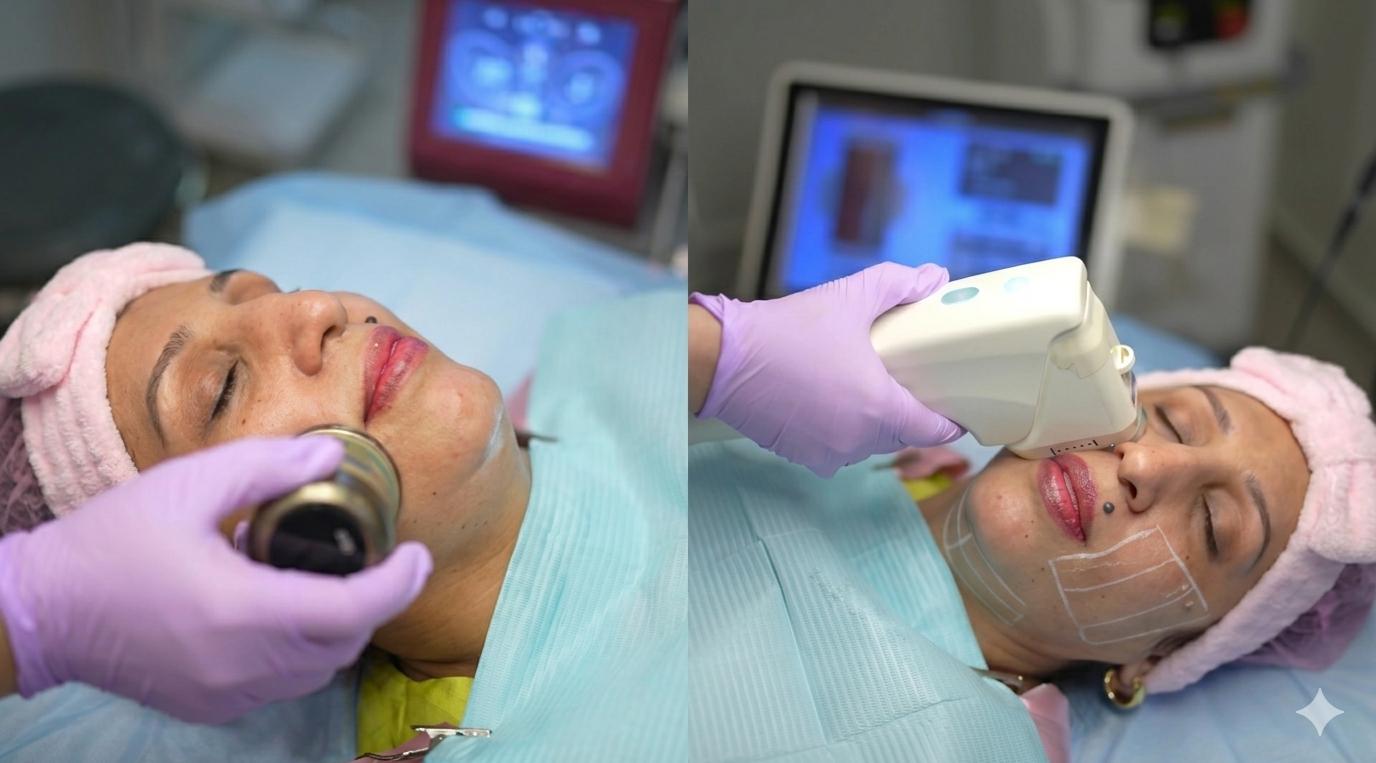
The most effective anti-aging treatments include neuromodulators, dermal fillers, high-intensity focused ultrasound, and fractional lasers. Skin aging is a complex biological process characterized by the depletion of collagen, elastin degradation, bone resorption, and the downward shift of facial fat pads. Addressing these structural changes requires clinical interventions that penetrate beyond the epidermis to modify tissue behavior and restore lost scaffolding. For individuals seeking reliable aesthetic procedures in Pakistan, understanding the distinct mechanisms of these medical-grade options is essential for establishing realistic expectations and achieving measurable results. The optimal approach rarely relies on a single modality; instead, practitioners commonly utilize a combination of targeted therapies to address texture, tone, and laxity simultaneously.
Key Takeaways:
- Neuromodulators and dermal fillers provide immediate, targeted correction for wrinkles and volume loss.
- Energy-based devices stimulate the body’s natural collagen production for structural skin tightening.
- Consistent, clinically proven interventions offer measurable improvements over over-the-counter topical creams.
The most effective anti-aging treatments include neuromodulators, dermal fillers, high-intensity focused ultrasound, and fractional lasers. Skin aging is a complex biological process characterized by the depletion of collagen, elastin degradation, bone resorption, and the downward shift of facial fat pads. Addressing these structural changes requires clinical interventions that penetrate beyond the epidermis to modify tissue behavior and restore lost scaffolding. For individuals seeking reliable aesthetic procedures in Pakistan, understanding the distinct mechanisms of these medical-grade options is essential for establishing realistic expectations and achieving measurable results. The optimal approach rarely relies on a single modality; instead, practitioners commonly utilize a combination of targeted therapies to address texture, tone, and laxity simultaneously.
1. Neuromodulators for Dynamic Wrinkles
Neuromodulators reduce dynamic wrinkles by temporarily blocking nerve signals to the specific facial muscles responsible for expression lines. When these muscles are relaxed, the overlying skin smooths out, preventing the formation of deep creases caused by repetitive movements such as frowning, squinting, or raising the eyebrows. The most frequently treated areas include the glabellar lines between the eyebrows, horizontal forehead lines, and lateral canthal lines, commonly known as crow’s feet. The effects of a standard Botox treatment typically become visible within 3 to 7 days and generally maintain their efficacy for 3 to 4 months. Consistent administration before static wrinkles permanently etch into the skin can support long-term smooth texture. Proper dosage and strategic placement by a trained professional are critical to maintaining natural facial expressions while achieving the desired clinical outcome.
2. Dermal Fillers for Volume Restoration
Dermal fillers restore lost facial volume and smooth deep static creases by injecting structural gel-like substances beneath the skin surface. As the human body ages, the natural production of hyaluronic acid decreases, leading to hollowing in the cheeks, temples, and under-eye regions, as well as the deepening of nasolabial folds and marionette lines. Hyaluronic acid-based fillers are the most widely utilized category due to their high safety profile and reversibility. Other formulations, such as calcium hydroxylapatite or poly-L-lactic acid, act as biostimulators, meaning they encourage the body to generate its own native collagen over a period of 6 to 12 weeks. Depending on the specific product composition and the metabolic rate of the patient, the longevity of these interventions ranges from 6 to 24 months. According to the American Society of Plastic Surgeons, soft tissue augmentation remains one of the top non-surgical aesthetic procedures globally due to its immediate visual impact and minimal recovery requirements.
3. High-Intensity Focused Ultrasound (HIFU)
High-intensity focused ultrasound stimulates deep tissue contraction and new collagen synthesis by delivering concentrated thermal energy to the foundational layers of the skin. This technology bypasses the surface epidermis entirely, depositing heat at precise depths of 1.5mm, 3.0mm, and 4.5mm. At the 4.5mm depth, the energy targets the Superficial Muscular Aponeurotic System (SMAS), the same fibromuscular layer manipulated during surgical facelifts. The localized heating to temperatures between 60°C and 70°C creates controlled micro-coagulation zones, prompting a robust wound-healing response. Over the subsequent 2 to 3 months, this regenerative cascade tightens skin tissue and improves the contour of the jawline, neck, and brow. An advanced HIFU treatment is an excellent option for patients in Sargodha exhibiting mild to moderate skin laxity who prefer a non-invasive approach without the extensive downtime associated with surgical excision.
4. Laser Resurfacing Technologies
Laser resurfacing devices remove damaged epidermal layers while heating the underlying dermis to trigger an intensive collagen remodeling process. These devices operate on the principle of selective photothermolysis, utilizing specific wavelengths of light to target water molecules within the skin tissue. The controlled thermal injury effectively addresses severe photodamage, uneven pigmentation, atrophic acne scars, and advanced textural irregularities.
Ablative vs. Non-Ablative Lasers
Ablative lasers, such as the Erbium:YAG and Carbon Dioxide (CO2) platforms, vaporize the outermost layers of the skin, yielding dramatic structural improvements but requiring 7 to 14 days of strict recovery. Modern iterations, like a fractionated CO2 fractional laser treatment, break the light beam into thousands of microscopic columns, leaving intact tissue around each thermal wound to dramatically accelerate the healing time. Non-ablative lasers keep the surface layer intact while delivering heat strictly to the dermis, requiring less downtime but necessitating a series of 3 to 6 sessions to achieve comparable outcomes. The American Academy of Dermatology notes that laser selection must be carefully matched to the patient’s Fitzpatrick skin type to mitigate the risk of post-inflammatory hyperpigmentation, particularly in South Asian demographics.
5. Chemical Peels for Cellular Turnover
Chemical peels utilize specific acidic formulations to rapidly exfoliate dead skin cells and accelerate the natural cellular turnover cycle. By chemically dissolving the desmosome bonds that hold aged, pigmented cells to the surface, these therapies reveal the smoother, healthier skin underneath. Formulations range in intensity. Superficial peels utilizing Alpha Hydroxy Acids (AHAs) like glycolic or lactic acid penetrate only the epidermis, providing a mild glow with zero downtime. Medium-depth peels employing Trichloroacetic Acid (TCA) reach the papillary dermis, effectively correcting moderate sun damage, fine lines, and stubborn melasma, though they involve 5 to 7 days of visible flaking. Deep peels reach the reticular dermis but carry higher risks and require significant clinical oversight. Consistent application of medium-depth acidic solutions may help maintain an even complexion and improve the penetration efficacy of daily topical regimens.
6. Microneedling and Collagen Induction
Microneedling creates thousands of microscopic puncture channels in the skin to activate the physiological wound-healing cascade and upregulate elastin production. Using a motorized device tipped with sterile, fine needles ranging from 0.5mm to 2.5mm in length, the practitioner induces controlled mechanical trauma. The body responds by releasing growth factors and depositing a new network of structural proteins. This physical mechanism is highly effective for reducing pore size, smoothing superficial scars, and minimizing fine lines. Furthermore, the micro-channels act as temporary delivery conduits, allowing for the deep infusion of potent serums, hyaluronic acid, or platelet-rich plasma (PRP). When paired with PRP, the concentrated growth factors extracted from the patient’s own blood amplify the regenerative signals, significantly reducing inflammation and enhancing the final textural outcome.
Comparing Aesthetic Modalities
| Treatment Modality | Primary Aesthetic Goal | Estimated Downtime | Duration of Results |
|---|---|---|---|
| Neuromodulators | Dynamic wrinkle reduction | None (minor swelling for 1 hour) | 3 to 4 months |
| Dermal Fillers | Volume restoration and contouring | 1 to 3 days (potential bruising) | 6 to 24 months |
| HIFU | Deep tissue lifting and tightening | None (mild tenderness) | 12 to 18 months |
| Fractional CO2 Laser | Severe textural and scar correction | 5 to 10 days | Multiple years |
| Medium Chemical Peel | Pigmentation and surface renewal | 5 to 7 days of peeling | 4 to 6 months |
Conclusion
Selecting the appropriate clinical intervention requires a thorough analysis of individual anatomical changes, skin type, and specific aging concerns. While neuromodulators and fillers offer rapid, targeted correction, energy-based technologies like HIFU and fractional lasers provide the foundational tissue remodeling necessary for long-term structural integrity. Residents in Pakistan seeking to address the signs of aging safely should consult with certified aesthetic professionals in Sargodha to formulate a comprehensive, multi-modal treatment plan. Combining these evidence-based therapies with daily ultraviolet protection and medical-grade skincare ensures that the clinical results are protected and sustained over time.
Frequently Asked Questions
Do anti-aging procedures provide permanent results?
No, most non-surgical aesthetic procedures provide temporary improvements lasting from 3 months to 2 years, requiring scheduled maintenance sessions to sustain the physiological effects.
Are neuromodulator injections safe for long-term use?
Yes, when administered by a qualified medical professional at appropriate clinical doses, neuromodulators have a long-established safety profile for ongoing aesthetic maintenance without damaging muscle function.
Can I combine multiple skin rejuvenation therapies in one session?
Yes, combining distinct modalities like injectables and energy-based devices is a common clinical practice and may help target different anatomical layers of aging simultaneously, provided the practitioner determines it is medically safe for your specific skin profile.
Is high-intensity focused ultrasound a painful procedure?
No, most patients experience only mild, transient discomfort or a warm prickling sensation deep within the tissue during the procedure, and topical anesthetics are commonly utilized to maximize overall comfort.
Will chemical peels thin my skin over time?
No, professional chemical peels actually stimulate the underlying dermis to produce thicker, healthier collagen networks, ultimately strengthening the skin’s structural integrity rather than thinning it.