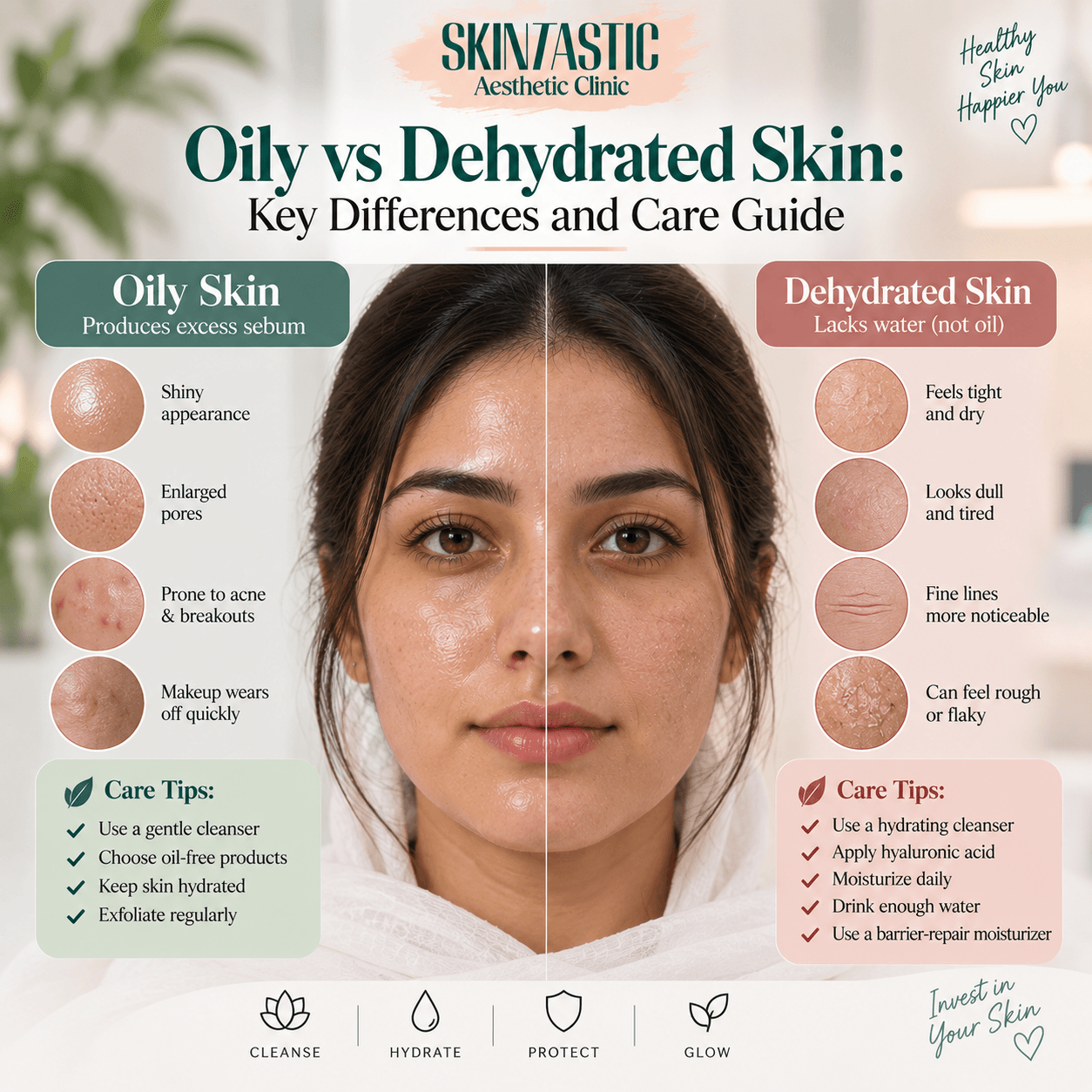
The fundamental difference between oily skin and dehydrated skin is that oily skin lacks regulation of natural oil, while dehydrated skin lacks sufficient water content within the stratum corneum. Oily skin is a genetic classification characterized by hyperactive sebaceous glands that continuously produce excess sebum over the entire face. Dehydrated skin is an acquired, treatable condition that occurs when the skin barrier loses moisture rapidly, a process known as transepidermal water loss (TEWL). Consequently, an individual can possess an oily skin type while concurrently suffering from acute cutaneous dehydration, creating a complex clinical presentation where the surface appears greasy yet feels uncomfortably parched.
- Oily skin represents a genetic skin type producing excess sebum, whereas dehydrated skin is a temporary skin condition marked by a deficiency of water.
- Oily skin often features enlarged pores and persistent shine across the face, while dehydrated skin feels tight, looks dull, and displays exaggerated fine surface lines.
- Skin can be simultaneously oily and dehydrated when an impaired moisture barrier triggers sebaceous glands to overcompensate for transepidermal water loss.
- Treating oily skin requires regulating sebum and preventing follicular blockages, whereas treating dehydrated skin requires replenishing humectants and repairing the stratum corneum barrier.
- Professional hydradermabrasion, light chemical peels, and topical humectants like hyaluronic acid help rebalance moisture levels without exacerbating oil production.
Oily Skin vs Dehydrated Skin: How to Tell the Difference
Understanding Oily Skin as a Genetic Skin Type
Oily skin is determined by internal genetics and endocrine activity rather than external environmental hydration factors. Sebaceous glands sit beneath hair follicles across the body, with the highest concentration found on the face, scalp, and upper chest. In oily skin types, circulating androgens stimulate these glands to overproduce sebum—a complex lipid mixture composed of squalene, wax esters, triglycerides, and free fatty acids. While sebum serves to lubricate the epidermis and maintain barrier defense, excessive secretion creates persistent cutaneous distress.
Individuals living in regions with fluctuating climates, such as the hot and humid summers typical of Punjab, Pakistan, frequently experience intensified sebaceous output. Increased ambient heat elevates the fluidity of sebum, allowing it to migrate rapidly through the follicular canal to the surface of the skin. This natural oil production does not fluctuate based on water intake; it remains relatively constant unless modulated by topical sebum-regulating agents, hormonal shifts, or specific medical interventions.
Common clinical indicators of oily skin include:
- Visible, enlarged pores distributed across the entire T-zone (forehead, nose, and chin) and central cheeks.
- A thick, robust epidermal texture that resists premature environmental fine line formation.
- A greasy film developing within 1 to 2 hours following facial cleansing.
- Frequent formation of closed comedones, open comedones (blackheads), and inflammatory pustules.
- Cosmetic foundation sliding, breaking apart, or oxidizing rapidly after morning application.
Understanding Dehydrated Skin as an Acquired Condition
Dehydrated skin is a structural barrier condition caused by low water content in the outer layer of the skin, not an absence of oil. The stratum corneum requires approximately 10% to 15% water concentration to maintain cellular flexibility, execute desquamation, and prevent irritation. When environmental stressors, harsh surfactants, or lifestyle factors degrade intercellular lipids—such as ceramides, cholesterol, and fatty acids—water readily evaporates out of the tissue. Clinical research published by the Journal of the American Academy of Dermatology confirms that an impaired barrier directly accelerates desiccation, rendering the epidermis vulnerable to foreign irritants.
Dehydration affects all skin types equally, meaning dry, balanced, combination, and oily skin profiles can each experience low cellular water volume. In urban environments across Pakistan, environmental extremes, prolonged air conditioning, excessive sun exposure, and dry winter winds frequently strip water from the skin. Furthermore, aggressive cleansing routines aimed at eliminating surface oil inadvertently strip natural moisturizing factors (NMF), leaving the cutaneous surface structurally depleted.
Common clinical signs of dehydrated skin include:
- A persistent sensation of surface tightness, especially immediately after bathing or washing the face.
- A lackluster, dull complexion reflecting light unevenly due to irregular cellular desquamation.
- Crepey surface texture displaying micro-fine, horizontal lines when the skin is gently compressed upward.
- Heightened reactivity, stinging, or burning upon the application of standard, non-active skincare products.
- Flaking or dry skin patches situated directly over areas producing noticeable surface oil.
How Can Skin Be Oily and Dehydrated at the Same Time?
Skin becomes oily and dehydrated simultaneously when an impaired moisture barrier prompts sebaceous glands to overcompensate by increasing oil production. When the superficial layers lose essential water, the skin barrier loses structural integrity. In an effort to shield the vulnerable tissue from further fluid loss, underlying sebaceous glands accelerate sebum production to construct an artificial occlusive seal. Consequently, the skin surface displays an oily sheen, yet the underlying cells suffer from functional drought.
This dual condition frequently stems from the misdiagnosis of skin needs. When patients notice excessive oil, their immediate reaction is often to use drying foaming washes, high-percentage alcohol toners, and harsh physical scrubs. While these formulations strip oil temporarily, they simultaneously dismantle the lipid matrix that anchors water within the epidermis. To mitigate this cycle, using a non-stripping cleanser such as anti-acne facewash clear skin solutions in Sargodha helps lift excess impurities and unclog congested pores without depleting essential cellular moisture.
Clinical Comparison: Oily Skin vs Dehydrated Skin
Evaluating specific cutaneous symptoms side by side allows patients to distinguish between sebum surplus and cellular water deficit. The following diagnostic matrix details the contrasting attributes observed during professional dermatological consultations:
| Diagnostic Feature | Oily Skin Type | Dehydrated Skin Condition |
|---|---|---|
| Primary Root Cause | Genetic hyperactivity of sebaceous glands and hormonal stimulation. | Compromised epidermal moisture barrier and elevated TEWL. |
| Pore Characteristics | Enlarged, visibly dilated, and prone to debris accumulation throughout the face. | Variable pore sizing; pores may appear stretched horizontally due to lost elasticity. |
| Surface Tactile Feel | Slick, supple, thick, and greasy to the touch. | Rough, tight, dry, or crepey despite superficial oiliness. |
| Visual Appearance | Persistent shine across the T-zone and cheeks; thick skin texture. | Dull, lackluster complexion showing superficial micro-lines. |
| Reactivity & Sensitivity | Generally resilient; low susceptibility to product stinging. | Highly reactive; frequent stinging, redness, and itching. |
| Primary Treatment Focus | Sebum regulation, cellular turnover, and non-comedogenic care. | Humectant hydration, barrier reconstruction, and lipid replenishing. |
Diagnostic Methods to Determine Your Skin State
Simple self-assessments help differentiate between underlying skin dehydration and pure sebaceous oiliness. Dermatologists rely on visual observation and tactile testing to evaluate the integrity of the stratum corneum before designing targeted topical or clinical interventions.
The Cleanse and Wait Method
The cleanse and wait evaluation measures baseline sebum recovery and epidermal tension in an unmedicated state. To perform this evaluation, wash the entire face with a mild, neutral-pH cleanser and pat the skin dry with a clean towel. Do not apply serums, toners, or moisturizers. Wait 30 minutes in a temperature-controlled room away from direct drafts or sunlight.
If the skin feels uniformly tight, uncomfortable, and shows faint, crepey lines upon smiling, dehydration is present. If an oily sheen forms rapidly across the nose, forehead, and chin within 30 minutes while the cheeks feel parched, the skin is dehydrated-oily. If the entire face looks shiny, supple, and comfortable with no sensation of tightness, the skin is primarily oily.
The Pinch Evaluation for Skin Turgor
Skin turgor assessment measures cutaneous elasticity and fluid concentration. Gently pinch a small fold of skin on the mid-cheek area between the thumb and forefinger, holding it for 2 seconds before releasing. Well-hydrated skin snaps back into place immediately without forming surface micro-wrinkles. If the pinched tissue holds fine, paper-like wrinkles for a second before flattening, the tissue lacks cellular water and requires structured rehydration therapy.
Corrective Daily Skincare Strategies for Both Profiles
Managing oily, dehydrated, or combination states requires balancing humectants with lightweight moisture retainers. Applying heavy, butter-based creams onto congested skin can induce comedogenesis, while completely avoiding moisturizers exacerbates trans-epidermal water loss. The following evidence-based ingredients and formulations support tissue equilibrium:
Active Humectants for Fluid Replenishment
Humectants operate by drawing moisture from the environment and deeper dermal tissues into the superficial epidermis. Key humectants include multi-molecular hyaluronic acid, glycerin, sodium PCA, and panthenol (pro-vitamin B5). Incorporating a targeted hydrator like HA serum in Sargodha deep hydration for radiant skin delivers low- and high-weight molecular chains into the skin layers to replenish lost fluids without depositing comedogenic surface oils.
Lightweight Formulations for Sebum-Prone Skin
Patients dealing with excess oil often omit hydrators, mistakenly assuming natural oil provides moisture. However, sebum lacks water-binding capacity. Switching from heavy creams to an oil-free, water-based formulation such as gel moisturizer lightweight hydration for skin in Sargodha supplies essential barrier support. These water-break formulas disperse moisture evenly, dry down to a non-tacky finish, and leave pores clear of heavy lipid deposits.
Sun Protection and Barrier Preservation
Ultraviolet radiation damages epidermal proteins, degrading the stratum corneum and accelerating dehydration. Patients with oily complexions must utilize broad-spectrum sunscreens that rely on chemical filters or micronized mineral blocks suspended in non-comedogenic fluids. Daily photoprotection preserves barrier integrity and halts the cellular degradation cycle that triggers rebound oil secretion.
Professional Clinical Treatments for Dehydrated and Oily Skin
Clinical skincare interventions resolve stubborn dehydration and excess oil faster than over-the-counter home care alone. When topical regimens fail to balance cutaneous fluid levels, specialized aesthetic therapies delivered in clinical facilities in Sargodha provide controlled, deep-layer remediation.
Professional therapeutic options include:
- Hydradermabrasion: Utilizes vacuum vortex technology to extract impacted sebum and dead skin cells while simultaneously infusing targeted serums packed with hyaluronic acid, peptides, and botanical antioxidants.
- Superficial Chemical Peels: Low-strength alpha-hydroxy acids (like lactic acid) stimulate natural moisture factor production, while beta-hydroxy acids (like salicylic acid) dissolve intra-pore sebum. Clinical reviews by the American Academy of Dermatology confirm that structured chemical exfoliation refines stratum corneum architecture and improves product absorption.
- Mesotherapy and Skin Boosters: Involves micro-droplet intradermal deliveries of stabilized hyaluronic acid directly into the papillary dermis, providing sustained water retention that cannot be achieved through topical application alone.
- Non-Ablative Laser Toning: Employs gentle thermal energy to modulate sebaceous gland hyperactivity, refine pore diameter, and stimulate restorative collagen fibers.
Conclusion
Distinguishing between oily skin and dehydrated skin is essential for developing a safe, productive skincare routine. Oily skin requires continuous regulation of excess sebum and consistent pore maintenance, while dehydrated skin demands focused barrier repair, environmental defense, and consistent humectant replenishment. Attempting to manage dehydrated skin using aggressive, degreasing astringents deepens epidermal barrier damage and prompts excess sebum production. By correctly identifying whether your skin lacks water, produces excess oil, or suffers from both concurrently, you can curate a targeted balance of gentle home products and professional aesthetic procedures that restore dermal balance, clarity, and enduring hydration.
Frequently Asked Questions
Can drinking 3 liters of water per day cure dehydrated skin?
No, drinking large volumes of water alone cannot resolve cutaneous dehydration if the stratum corneum barrier remains structurally compromised. While proper systemic hydration supports overall tissue function, water consumed orally enters the bloodstream and hydrates vital internal organs before reaching the epidermis. If your epidermal lipid matrix is depleted from harsh cleansers or environmental exposure, newly delivered water evaporates immediately via transepidermal water loss. Correcting dehydration requires topical humectants to attract water paired with barrier-restoring ingredients to seal it in place.
Can dehydrated skin cause acne breakouts?
Yes, dehydrated skin can directly contribute to increased acne formation. When the skin lacks sufficient water, natural shedding enzymes malfunction, leading to the retention of dead surface cells. These desquamated cells combine with oxidized sebum to form dry plugs within hair follicles. Furthermore, the skin often overproduces oil to compensate for moisture deficits, creating an ideal breeding ground for Cutibacterium acnes bacteria underneath the dry, compacted epidermal surface.
Is a gel moisturizer better than a cream for dehydrated oily skin?
Yes, a water-based gel moisturizer is typically more effective and safer for dehydrated oily skin than a heavy cream. Gel formulations contain high concentrations of humectants like glycerin and hyaluronic acid without the heavy botanical oils, mineral waxes, or fatty esters common in restorative creams. This provides structural water replenishment directly to depleted cells without clogging enlarged follicles or creating an unwanted greasy layer over the surface.
Can chemical peels help improve skin dehydration?
Yes, superficial chemical peels using mild alpha-hydroxy acids can support skin rehydration when administered by qualified aesthetic professionals. Peels formulated with lactic acid or low-percentage mandelic acid eliminate the stratum corneum’s outermost layer of dry, non-viable cells that block topical absorption. Additionally, lactic acid acts as a natural humectant, encouraging the skin to synthesize endogenous ceramides and retain water more effectively once the barrier normalizes.
Does using blotting papers worsen skin dehydration?
No, using clean blotting papers does not worsen dehydration if applied correctly by pressing gently onto the surface. Blotting papers selectively absorb free-floating surface lipids without extracting bound water from within the cellular matrix. However, rubbing aggressively with papers or using powder-infused variants excessively can cause superficial mechanical friction, potentially irritating a vulnerable moisture barrier.