CO2 Fractional Laser for Acne Scars: Results, Downtime & Honest Expectations
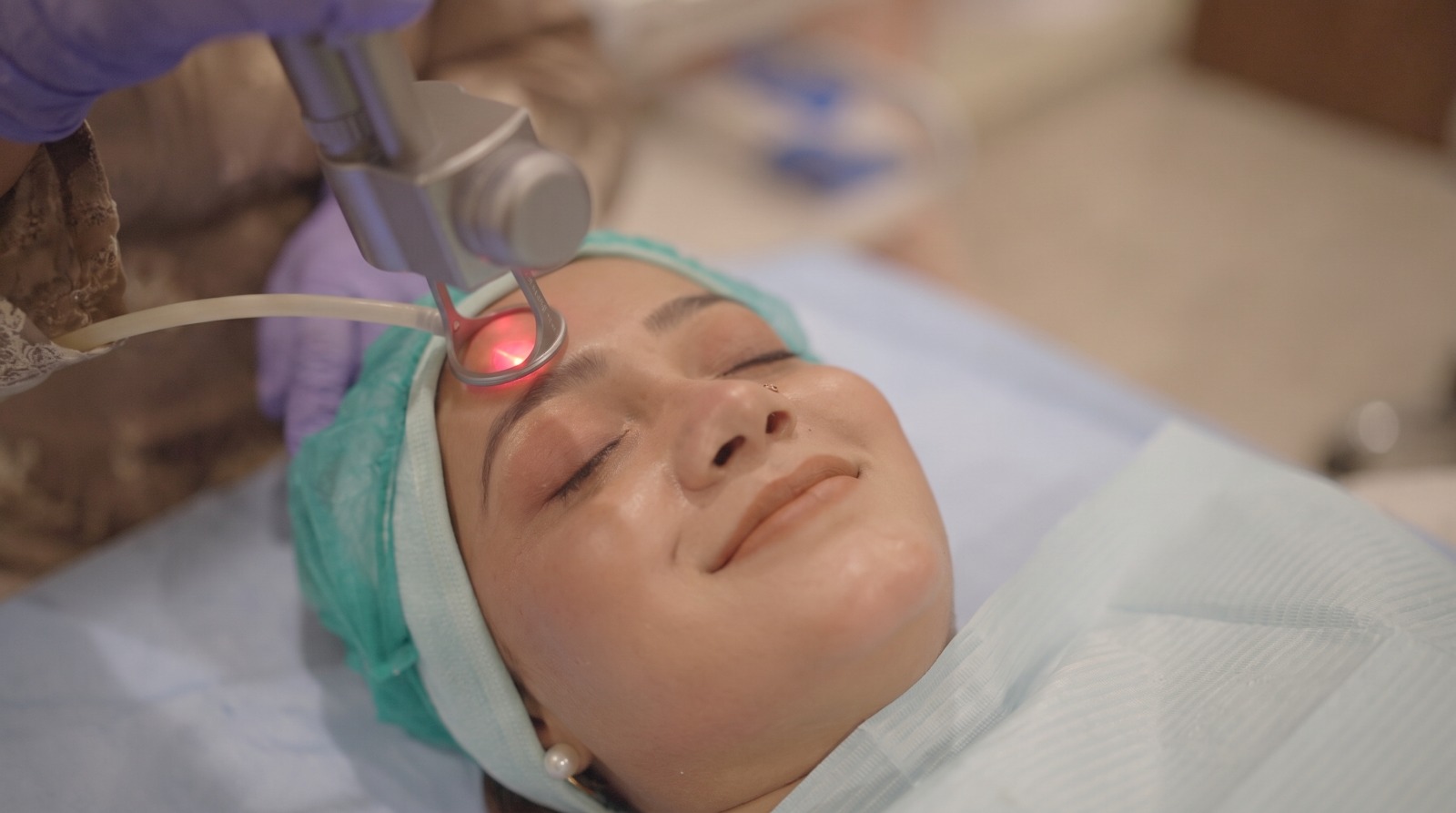
CO2 fractional laser for acne scars is an advanced ablative skin resurfacing procedure that creates microscopic columns of thermal injury (microthermal zones) in the dermis while leaving surrounding tissue intact. This triggers a powerful wound-healing cascade, breaking down fibrotic scar tethers and stimulating fresh neocollagenesis. In Sargodha at Skintastic Aesthetic Clinic, Dr. Ammarah Tahir customizes pulse energy and density to treat rolling and boxcar scars effectively while safeguarding South Asian skin against post-inflammatory hyperpigmentation. Typical recovery involves 5 to 7 days of micro-crusting and social downtime.
Severe acne during adolescence or early adulthood often resolves only to leave behind a permanent, emotionally distressing legacy: atrophic, pitted, and textured acne scars. In Pakistan, countless individuals spend years applying commercial scar gels, vitamin E oils, or undergoing mild parlor cleanups hoping these depressions will fill in. Unfortunately, topical cosmetics cannot alter structural dermal architecture. For true biological remodeling of indented tissue, CO2 fractional laser for acne scars remains the clinical gold standard in modern aesthetic dermatology.
However, undergoing an ablative laser in Sargodha requires realistic education regarding the biological mechanism, expected recovery downtime, and the specific precautions necessary for South Asian skin tones. At Skintastic Aesthetic Clinic, Dr. Ammarah Tahir provides this complete, transparent clinical guide.
Understanding Atrophic Acne Scars: Why Surface Creams Fail
When an inflammatory acne lesion (papule, pustule, or deep cyst) ruptures deep within the dermis, it damages the surrounding extracellular matrix. During the abnormal wound-healing phase, inflammatory fibroblasts produce rigid fibrotic scar tissue that tethers the epidermis downward, creating a physical depression. Dermatologists classify these scars into three distinct morphological categories:
- Rolling Scars: Broad depressions (>4mm) with sloping edges that give the cheek a wavy, undulating appearance. They are caused by fibrous tethering to the subcutaneous tissue.
- Boxcar Scars: Sharp, vertically punched-out depressions with clearly demarcated vertical borders (1.5mm to 4mm wide).
- Ice-Pick Scars: Deep, narrow (<2mm) puncture-like pits extending into the deep reticular dermis. (These often require focal TCA CROSS chemical reconstruction in addition to fractional laser).
The Mechanism of Fractional CO2 Resurfacing: Controlled Microthermal Zones
Older ‘fully ablative’ CO2 lasers vaporized 100% of the skin’s surface, resulting in months of severe weeping wounds, intense erythema, and high rates of scarring in darker skin types. The breakthrough invention of fractional photothermolysis transformed safety and efficacy:
The fractional CO2 laser (wavelength 10,600nm) delivers a computerized grid of microscopic light beams into the skin. Each beam creates a microscopic column of thermal ablation called a Microthermal Zone (MTZ), penetrating up to 1mm to 1.5mm into the reticular dermis. Crucially, the laser leaves bridges of healthy, undamaged tissue between each microscopic column.
These surrounding intact epidermal cells migrate rapidly into the micro-wounds, initiating an accelerated healing cascade. Over the subsequent 3 to 6 months, heat shock proteins trigger fibroblasts to break down old disorganized scar tissue and lay down newly organized Type I and Type III collagen and elastin fibers.
Downtime and Healing Timeline: Day-by-Day Expectations
Transparency regarding downtime is vital so patients can plan work and social obligations accordingly:
- Day 1 (Procedure Day): Face feels sunburned, tight, and warm for 2 to 4 hours. Mild swelling and pinpoint erythema develop. Cold saline compresses and sterile barrier ointments are applied.
- Days 2–3: Swelling subsides. The skin develops a bronze or tanned appearance as microscopic epidermal necrotic debris (MENDs) forms a protective grid of tiny dots across the treated zones.
- Days 4–6: The micro-crusts begin shedding naturally during gentle washing. The skin must never be picked or scratched.
- Day 7: Crusts have almost completely detached, revealing fresh, baby-pink, refined skin. Patients can typically return to public duties while wearing strict broad-spectrum mineral sunscreen.
Managing Safety for South Asian Skin: Preventing PIH
Fitzpatrick skin types III to V have melanocytes that are inherently reactive to heat. At Skintastic Sargodha, Dr. Ammarah Tahir utilizes specific medical safeguards:
- Pre-Treatment Priming: Priming the skin with topical tyrosinase inhibitors (such as azelaic acid or tranexamic acid) for 2 to 4 weeks prior to laser treatment calms melanocyte sensitivity.
- Calibrated Fluence & Pitch: Energy pulse duration is kept narrow and microscopic beam pitch (spacing) is widened to prevent excessive thermal accumulation.
- Strict Post-Operative Photoprotection: Total sun avoidance during the initial 7 days, followed by mandatory daily physical zinc-oxide sunscreen application for 12 weeks.
| Scar Severity | Recommended Sessions | Spacing Between Sessions | Realistic Textural Improvement |
|---|---|---|---|
| Mild Textural Scars | 1 to 2 sessions | 6 to 8 weeks | 60% to 75% improvement |
| Moderate Rolling & Boxcar | 3 to 4 sessions | 8 to 10 weeks | 50% to 70% visible smoothing |
| Severe Fibrotic / Mixed | 4+ sessions (Combined with subcision) | 8 to 12 weeks | 40% to 60% structural improvement |
Frequently Asked Patient Questions
Ready to Smooth Stubborn Atrophic Acne Scars?
Schedule a scar depth analysis with Dr. Ammarah Tahir at Skintastic Aesthetic Clinic on Queen’s Road, Omer Park, Sargodha.