Pico Laser for Pigmentation: Can It Really Fade Melasma & Dark Spots?
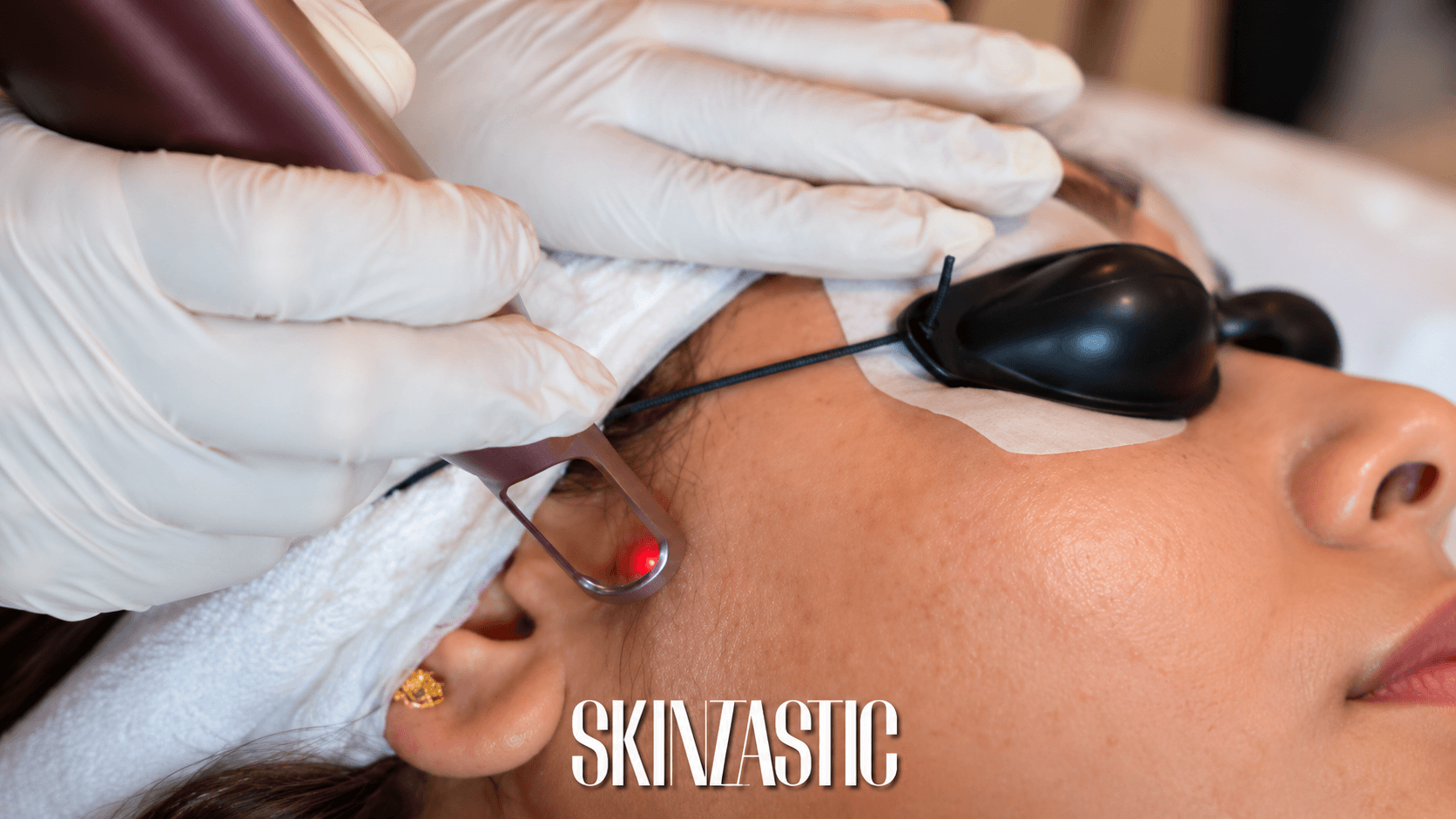
Pico laser for pigmentation operates using ultra-short picosecond pulses (one-trillionth of a second) to deliver a photoacoustic shockwave that shatters stubborn melanin deposits into dust-like microparticles without generating excess heat. This photoacoustic mechanism minimizes the risk of post-inflammatory hyperpigmentation (PIH), making it safer for South Asian Fitzpatrick skin types III to V. At Skintastic Sargodha, Dr. Ammarah Tahir utilizes Pico laser protocols alongside topical barrier therapy to gradually fade melasma, solar lentigines, and post-acne marks.
Hyperpigmentation—particularly melasma, solar lentigines (sun spots), and post-inflammatory hyperpigmentation (PIH)—is arguably the most widespread and psychologically distressing skin concern treated across Pakistan. In cities like Sargodha, where UV indices frequently exceed 9 during summer and environmental particulate pollution creates chronic cellular inflammation, melanocytes (pigment-producing cells) become chronically overactive. When over-the-counter brightening creams fail, patients naturally research advanced technology like pico laser for pigmentation.
However, lasers on South Asian skin require extraordinary clinical caution. At Skintastic Aesthetic Clinic, Dr. Ammarah Tahir emphasizes that understanding the specific mechanism of Pico laser is essential to appreciate why it represents a major technological leap over older laser modalities.
Photoacoustic vs. Photothermal: Why Picosecond Pulses Matter
To understand the revolutionary nature of the Pico laser, one must compare it to traditional Q-switched nanosecond lasers:
- Traditional Q-Switched (Nanosecond) Lasers: These devices fire energy in one-billionth of a second. They rely heavily on a photothermal effect—heating the pigment until it fractures. The critical disadvantage for Fitzpatrick Skin Types III to V is that excess heat diffuses into the surrounding healthy dermal tissue. In South Asian skin, this excess heat frequently triggers reactive melanogenesis, causing rebound hyperpigmentation.
- Pico Lasers (Picosecond): A picosecond is one-trillionth of a second—a thousand times faster than a nanosecond. Because the pulse duration is so phenomenally short, the laser energy delivers a purely photoacoustic shockwave. It shatters the melanin cluster mechanically—grinding it into microscopic, dust-like particles—without creating thermal collateral damage to surrounding skin tissue.
Once fragmented into micro-dust, your body’s immune scavenger cells (macrophages) easily engulf, metabolize, and eliminate the pigment through the lymphatic system over the following 2 to 6 weeks.
Can Pico Laser Treat Melasma? The Honest Medical Reality
Melasma is not merely a superficial spot; it is a complex, chronic condition involving overactive melanocytes, estrogen-progesterone receptor sensitivity, compromised vascular networks, and UV exposure. Because of this complexity, no medical laser in the world can permanently ‘cure’ melasma, and any clinic claiming otherwise is engaging in deceptive marketing.
What Pico laser can achieve—under expert parameters—is substantial, visible lightening of epidermal and mixed melasma patches without the thermal burn risk of older lasers. At Skintastic, Dr. Ammarah Tahir pairs low-fluence Pico laser toning with:
- Topical Tyrosinase Inhibitors: Ingredients like tranexamic acid, azelaic acid, kojic acid, and arbutin to biochemically calm pigment production pathways.
- Broad-Spectrum Defense: Mineral sunscreens containing iron oxides, which block not only UVA/UVB but also high-energy visible (HEV) blue light, a recognized melasma trigger.
- Barrier Support: Keeping the skin barrier hydrated to prevent secondary inflammatory flares.
What Types of Pigmentation Respond Best to Pico Laser?
| Pigment Concern | Expected Response | Typical Session Course |
|---|---|---|
| Solar Lentigines (Sun Spots) | Excellent; pigment darkens temporarily into micro-crusts then flakes off within 7 days | 1 to 3 sessions |
| Post-Inflammatory Marks (PIH) | Very good; accelerates clearance of stubborn brown marks left by healed acne | 3 to 5 sessions |
| Melasma (Hormonal / Mixed) | Gradual lightening and evening of skin tone; requires continuous maintenance | 4 to 6+ low-fluence sessions |
| Freckles (Ephelides) | High clearance; fades superficial epidermal clusters rapidly | 2 to 3 sessions |
What to Expect During and After a Pico Laser Session
A typical session at Skintastic lasts approximately 30 to 45 minutes. Topical numbing cream may be applied for enhanced comfort, although many patients find the sensation—similar to tiny warm prickles—completely tolerable without anesthesia. Immediately following treatment, mild erythema (redness) similar to a gentle sunburn is normal, typically subsiding within 12 to 24 hours. There is no major peeling, scabbing, or social downtime, allowing patients to resume normal routines the following day.
Frequently Asked Patient Questions
Struggling with Stubborn Melasma or Sun Spots?
Get an individualized pigmentation diagnostic assessment with Dr. Ammarah Tahir at Skintastic Aesthetic Clinic, Queen’s Road, Sargodha.